
MetroMandi logo MetroMandi

Amtrak Daylight Saving 2026: Avoid Missed Canada Trains

Clock changes on 1 Nov 2026 can cost you a Cascades train. Five quick checks to confirm your Amtrak daylight saving time and avoid a missed departure.
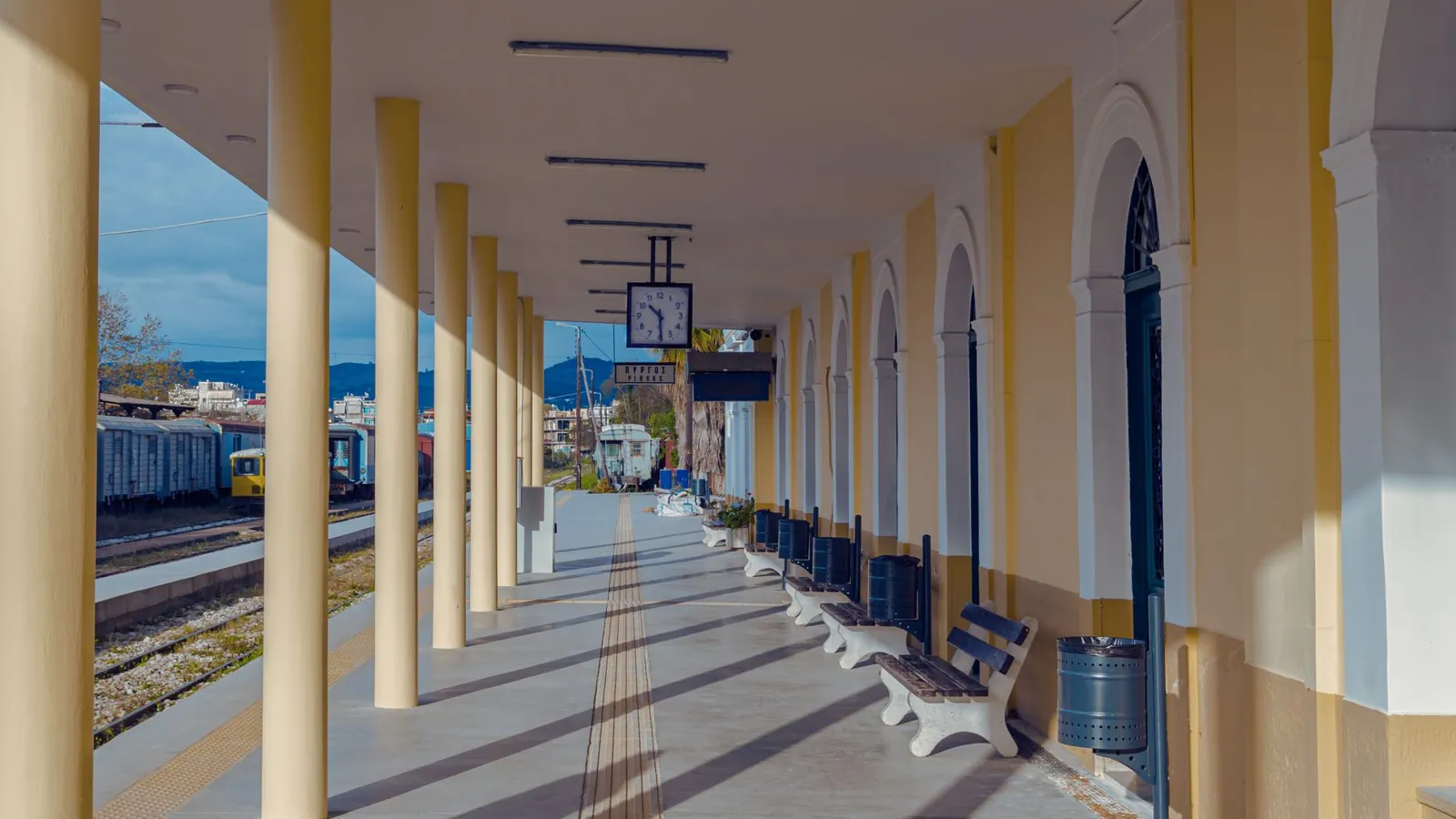
Daylight Saving Time on Amtrak: How to Avoid Missed Trains on Canada Routes — illustrative featured image
# Daylight Saving Time on Amtrak: How to Avoid Missed Trains on Canada Routes A missed train is one of travel's quietest disasters. No announcement, no refund desk, no sympathetic gate agent. The train simply leaves, and you are standing on a platform in Seattle or Vancouver holding a ticket for a departure that already happened. This November, clock changes on both sides of the US-Canada border make that scenario a little more likely than usual, and Amtrak has been flagging it to Cascades passengers. Here is the good news: you can sort this out in about fifteen minutes. That is roughly the time it takes to check your booking, confirm which time zone your ticket is printed in, and set a backup alarm. What follows is the how-to, step by step, with the specific things that go wrong at each stage and how to spot them before they cost you a train. ## Why the clock change bites Canada-bound travelers The US and Canada both fall back on the first Sunday of November. In 2026, that lands on 1 November. On the surface, this is the easy transition: clocks go back an hour, so you gain an hour and nobody misses anything, right? Not quite. The Amtrak Cascades route runs between Vancouver, British Columbia and Seattle, then down through Portland to Eugene. Vancouver sits in Pacific Time, same as Seattle, so the fall-back is synchronized. The spring-forward in March is the genuinely dangerous one, because a train that departs Vancouver at 6:30 a.m. local time may appear on a US-side timetable as 7:30 a.m. Pacific, and if you read the wrong column you show up an hour late. The fall change is subtler. It produces a strange limbo window between 1 a.m. and 2 a.m. where the same clock hour occurs twice. Overnight and early-morning departures in that window are where confusion lives. Amtrak's warning to travelers on Canada trips is essentially a reminder: verify the time on your actual ticket, not the one you remember booking. ### The three time-zone traps on this corridor | Trap | What happens | How to spot it | |---|---|---| | Ticket time vs. local time | Ticket shows departure in a zone you did not expect | Check the time zone code printed next to the time | | Cross-border date change | An overnight train arrives on a different calendar date | Confirm arrival date, not just arrival time | | App vs. station clock | Phone auto-updates, station board has not | Compare both before you leave your hotel | ## Step 1: Pull up your actual booking, not your memory Open the Amtrak app or your confirmation email and read the departure time exactly as printed. Do not rely on what you remember choosing at checkout. This takes two minutes and it is the single highest-value check you can do. **What goes wrong:** you look at a screenshot you saved weeks ago, before a schedule adjustment. Amtrak occasionally tweaks Cascades timings, and a saved screenshot goes stale silently. **How to tell:** the app and your screenshot disagree. Trust the app, then call Amtrak to confirm if the gap is more than ten minutes. ## Step 2: Identify the time zone on the ticket Every Amtrak ticket prints a time zone code next to the time (PT for Pacific, ET for Eastern). For Cascades, everything from Vancouver south is Pacific Time. Confirm that code matches where you will physically be standing. **What goes wrong:** you booked a connecting leg from an Eastern Time city and assumed the whole itinerary ran on one clock. **How to tell:** the codes differ between legs on the same booking. If they do, build your buffer around the tighter of the two. ## Step 3: Set your alarm against the new clock, not the old one The night before travel, set your alarm for a fixed number of hours before departure, then check it again after your phone has auto-updated. Phones on automatic network time handle the change correctly; the danger is a manual alarm set the day before. **What goes wrong:** you set "wake at 5 a.m." on Saturday for a Sunday train, and your phone shifts the alarm with the clock, which is actually what you want, but a hotel wake-up call booked through a front desk may not. **How to tell:** ask the front desk to confirm the wake-up time in both the old and new clock. If they hesitate, use your phone. ## Step 4: Build a buffer sized to the border, not the city Cascades crossings involve customs screening, and the fall-back weekend adds staffing weirdness on both sides. Arrive at Vancouver Pacific Central or Seattle King Street at least 60 minutes before departure, 90 if you are checking bags. **What goes wrong:** you plan a 30-minute cushion based on a normal weekday, and the border queue eats it. **How to tell:** if the departure board still shows your train but the queue is not moving, you are already late. Leave the queue, find staff, and ask about priority screening. ## Step 5: Confirm the arrival time in the destination's local clock This matters most for overnight or early trains. A 11:45 p.m. departure that crosses into a new date can arrive at what looks like an earlier hour. Read the arrival line on your ticket and say the day of the week out loud. **What goes wrong:** you book a hotel for the wrong night because the arrival date shifted. **How to tell:** your hotel confirmation and your ticket show different dates. Fix the hotel, not the train. ## What this costs you (and what it does not) None of these checks cost money. The costs sit in the failure modes: a rebooked Cascades ticket typically runs 40 to 120 USD (roughly ₹3,400 to ₹10,200 at current rates), and a missed cross-border train can mean a same-day flight at three or four times that. A hotel night booked for the wrong date is usually non-refundable on discount rates. If you are booking fresh for a clock-change weekend, book directly with Amtrak rather than a third-party reseller. Direct bookings are easier to change when a schedule shifts, and the fare difference is usually small. If you are hunting for a deal on the US leg, our travel coupon pages occasionally carry rail and hotel offers, but verify the terms against the clock-change date before you commit. ## Our take For this corridor, we recommend three concrete habits. First, book direct with **Amtrak** and enable app notifications, because schedule alerts are the fastest warning you will get. Second, if you are crossing at Vancouver, use **Pacific Central Station** staff for a same-day time check rather than trusting a station board that may lag. Third, for the hotel night, book a flexible rate through a chain like **Marriott** or **Hilton** if your arrival date sits near midnight, so a date confusion is a phone call, not a sunk cost. If you are traveling in the spring-forward window in March rather than the fall, double every check. That is the direction where an hour genuinely disappears, and it is where most missed trains happen. ## FAQ **Does Amtrak Cascades run on the same time as Vancouver?** Yes. Vancouver, Seattle, and Portland all sit in Pacific Time, so the fall-back on 1 November 2026 is synchronized across the route. The risk is reading the wrong time zone column, not a genuine offset. **What time do clocks change in 2026?** Clocks fall back on Sunday, 1 November 2026 in both the US and Canada. The repeated 1 a.m. to 2 a.m. window is where early departures get confusing. **Should I rebook if my train falls in the clock-change window?** Only if your departure sits between midnight and 3 a.m. For daytime Cascades departures, a careful ticket check is enough. For overnight trains, call Amtrak and confirm the printed time before you travel.

Frequently asked questions

Does Amtrak Cascades run on the same time as Vancouver?

Yes. Vancouver, Seattle, and Portland all sit in Pacific Time, so the fall-back on 1 November 2026 is synchronized across the route. The risk is reading the wrong time zone column, not a genuine offset.

What time do clocks change in 2026?

Clocks fall back on Sunday, 1 November 2026 in both the US and Canada. The repeated 1 a.m. to 2 a.m. window is where early departures get confusing.

Should I rebook if my train falls in the clock-change window?

Only if your departure sits between midnight and 3 a.m. For daytime Cascades departures, a careful ticket check is enough. For overnight trains, call Amtrak and confirm the printed time before you travel.